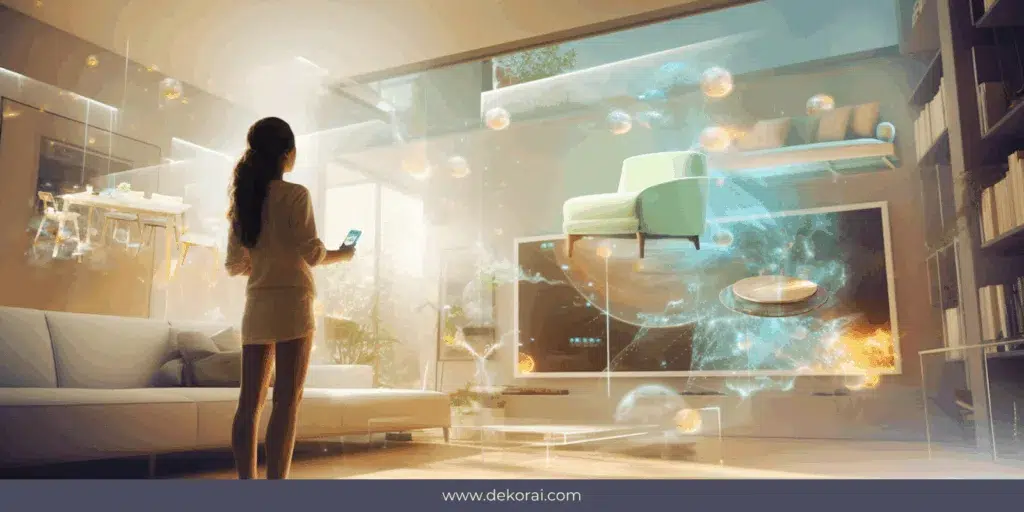
The idea of having a custom-designed home is no longer exclusive to luxury projects. In 2025, the artificial intelligence (AI) It's revolutionizing the world of interior design by offering personalized proposals that adapt to each person.
How does it do it? AI Analyze user tastes, habits, and context to generate interior designs that are not only visually appealing but also respond to the functional needs of daily life. In this way, digital creativity is united with human touch to make room for homes that truly reflect the personality of those who live in them.
How does on-demand design with AI work?
The process is data-driven:
- Personal preferencesFavorite styles, preferred colors, inspirational pieces.
- Daily habitsHow are spaces used (teleworking, leisure, rest, social gatherings).
- Spatial contextDimensions, lighting, current layout, and existing materials.
With this information, the AI generates proposals ranging from furniture arrangement to the Most suitable color palette, offering visual options in seconds.
👉 Example: platforms like DekorAI y Homestyler allow the creation of AI simulations that analyze both desired measurements and style.
Practical examples of customization
- Interactive 3D Simulations
The user uploads a photo of their living room, and in seconds, the AI suggests layouts, color palettes, and furniture combinations.
- Smart moodboards
Based on aesthetic preferences or reference images, algorithms suggest coherent collections of furniture and accessories.
- Shoppable recommendations
Each proposal can be connected to e-commerce, allowing you to buy the recommended parts with a single click.
- Space optimization
AI analyzes circulation, natural lighting, and ergonomics to propose improvements that increase daily comfort.
👉 Get inspired by projects like IKEA Kreativ, which combines space scanning with immediate purchase options.
Benefits of on-demand design with AI
- Speedinstant proposals that used to take weeks of work.
- Accessibilitydemocratizes professional interior design.
- CustomizationEach design is unique, tailored to the client.
- Flexibilitydifferent styles and layouts can be tested at no extra cost.
- Hybrid collaborationThe human designer brings narrative and cultural sensitivity, while AI accelerates execution.
A report from McKinsey confirms that AI applied to retail and design improves conversion by 35% and increases customer loyalty.
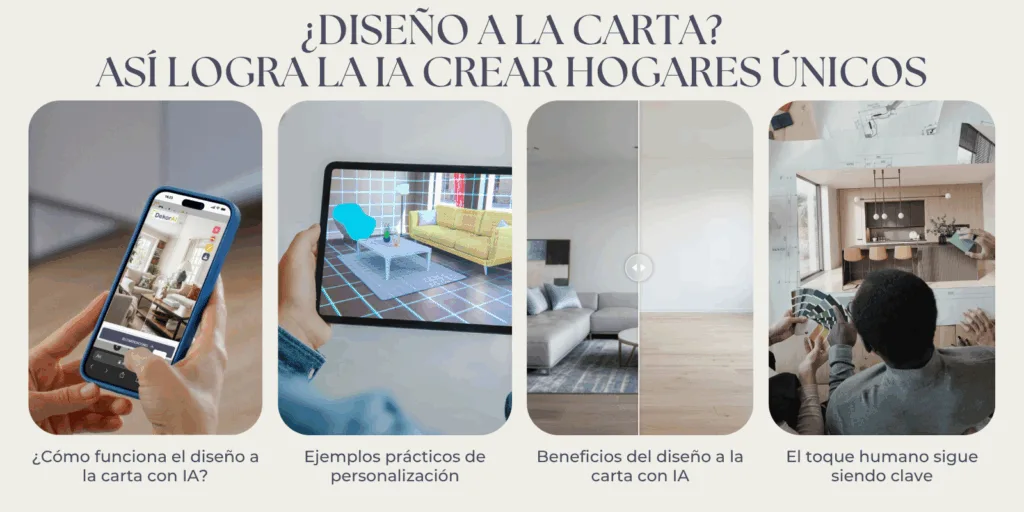
The human touch remains key
Although AI offers personalization at scale, the The human factor remains irreplaceable. Interior designers contribute:
- Cultural and narrative context.
- Emotional connections in spaces.
- Technical supervision (plumbing, electrical, regulations).
The combination of algorithms + human creativity that's what makes AI-designed homes truly memorable.
Frequently Asked Questions
Can AI design a home without human intervention?
No. AI generates proposals, but the vision and supervision of a professional designer remain essential.
How is accuracy ensured in measurements and materials?
With 3D scanning tools and certified material databases. Example: Matterport.
Is custom AI design expensive?
Not necessarily. There are free plans on platforms like Planner 5D and Homestyler, and premium versions with more features.
Can I integrate my current furniture into the design?
Yes. Many platforms allow you to upload photos or 3D models of your furniture to incorporate them into the simulation.
What about the technical aspects like electrical installations?
Those aspects still require human supervision. AI is a creative and visual tool, not a substitute for engineering.
The Custom design with AI It represents the end of generic spaces. Thanks to algorithms that analyze tastes, habits, and context, anyone can now visualize their dream home in minutes, with personalized proposals ready to be brought to life.
The digital and the human no longer compete: they complement each other. And the result is homes more unique, more comfortable, and more authentic.
💡 Discover how to apply AI-driven custom design to your home on DekorAI.com.


 Español de Chile
  Português do Brasil
 English
